Maha Shivratri महाशिवरात्रि
The Great Night of Shiva
The great night of Shiva on Phalguna Krishna Chaturdashi (Purnimanta), kept with fasting, vigil and four-prahar worship.
About Maha Shivratri
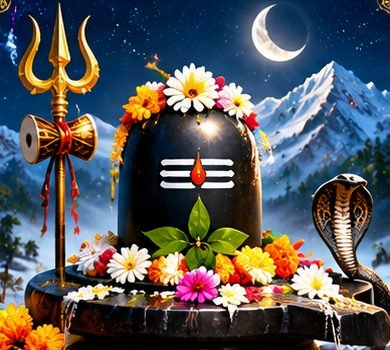
Maha Shivratri is the most sacred of the monthly Shivaratris. Devotees fast, keep vigil through the night and offer abhisheka to the Shivalinga with water, milk, bilva leaves and other offerings across the four prahars of the night.
It is associated with the manifestation of Shiva as the infinite pillar of light (Lingodbhava) and with the marriage of Shiva and Parvati.
- Also known as
- Mahashivaratri, Shivaratri
- Sanskrit
- महाशिवरात्रिः
- Deity
- Shiva
- Tradition
- Shaiva / Hindu
- Regions
- All India, Nepal
- Categories
- Major Hindu Festivals, Shiva Festivals, Vrat & Upvas
- Observance rule
- Magha Krishna Chaturdashi (Amanta) — Phalguna Krishna Chaturdashi (Purnimanta); observed when the tithi prevails at nishita kaal.
History and Origin
This section is being prepared and reviewed by the Vedicsiddhanta editorial team. Subscribe to be notified when it is published.
Festival Stories
Puranic, Itihasa and traditional narratives. Variants are labelled with their source and tradition.
Lingodbhava — the Column of Light लिङ्गोद्भव कथा
Brahma and Vishnu search in vain for the ends of an infinite pillar of fire — the manifestation of Shiva remembered on Maha Shivratri.
When Brahmā and Viṣṇu disputed their supremacy, an endless column of light appeared between them. Viṣṇu as a boar dug downwards and Brahmā as a swan flew upwards, but neither found its limit. Śiva then revealed himself from the pillar. Many traditions hold that this manifestation took place on the night now kept as Mahāśivarātri.
- Narrative source (Purana / Itihasa / folk)
- Purana
- Variant / tradition note
- Other traditions connect the night with the marriage of Shiva and Parvati, or with Shiva drinking the halahala poison.
Source: Śiva Purāṇa (Vidyeśvara Saṃhitā); Liṅga Purāṇa · Rights: Original Vedicsiddhanta content · Reviewed by Rocky Jamwal
Vrat and Upvas
Many observe a nirjala or phalahar fast with night-long vigil; Parana is done the next morning after sunrise within the Chaturdashi window prescribed by the tradition followed.
Health note: those who are unwell, pregnant, elderly or on medication should adapt fasting with medical advice; traditions themselves permit exemptions.
Vrat Katha
This section is being prepared and reviewed by the Vedicsiddhanta editorial team. Subscribe to be notified when it is published.
Puja Vidhi
Step-by-step guidance. Follow the practice of your family tradition and guru where it differs.
Maha Shivratri Night Worship (four-prahar outline) महाशिवरात्रि चार प्रहर पूजा
An outline of the night-long worship of Shiva in four prahars with abhisheka, bilva offerings and japa.
Preparation & arrangement
Bathe, take the vrat sankalpa in the morning and keep the day in fasting and remembrance. Arrange water, milk, curd, ghee, honey, sugar, bilva leaves, white flowers, bhasma, sandal paste, dhatura and a lamp.
Puja sequence
- Sankalpa for the night
State the intention to worship through the four prahars. - First prahar
Abhisheka with water and milk; offer bilva and flowers; chant Om Namah Shivaya. - Second prahar
Abhisheka with curd; offerings and japa continue. - Third prahar
Abhisheka with ghee; Nishita Kaal (around midnight) is the focal time of worship. - Fourth prahar
Abhisheka with honey; complete the worship before dawn. - Jagaran
Keep vigil with bhajans, Shiva stotras or reading of the Shiva Purana. - Parana
Break the fast the next morning after sunrise, within the time prescribed by your tradition.
Source: Editorial outline; the offering assigned to each prahar varies by tradition — review against Śiva Purāṇa and family paddhati · Rights: Original Vedicsiddhanta content · Reviewed by Rocky Jamwal
Mantra Sangrah
Panchakshari Mantra पञ्चाक्षरी मन्त्र
- Meaning (English)
Om, salutations to Śiva, the auspicious one.
- अर्थ (हिन्दी)
ॐ, कल्याणकारी शिव को नमस्कार।
- Use / context
- Through the night of Maha Shivratri, on Pradosh and Mondays.
- Japa count
- 108 or more
Source: Śrī Rudram (Kṛṣṇa Yajurveda, Taittirīya Saṃhitā 4.5), Namakam — “namaḥ śivāya ca śivatarāya ca” · Rights: Public domain · Reviewed by Rocky Jamwal
Stotra Sangrah
This section is being prepared and reviewed by the Vedicsiddhanta editorial team. Subscribe to be notified when it is published.
Aarti Sangrah
This section is being prepared and reviewed by the Vedicsiddhanta editorial team. Subscribe to be notified when it is published.
Puja Samagri
Quantities are shown only where verified; traditional alternatives are listed.
Muhurat & Panchang — New Delhi, 2027
Magha Krishna Chaturdashi (Amanta) — Phalguna Krishna Chaturdashi (Purnimanta); observed when the tithi prevails at nishita kaal.
| Date | Tithi | Tithi window | Muhurat | Sunrise / Sunset | Status |
|---|---|---|---|---|---|
| Sat, 6 Mar | Krishna Chaturdashi Phalguna |
Mar 6, 12:03 → Mar 7, 13:46 | Nishita Kaal: 00:07–00:56 | 06:41 / 18:23 | Indicative |
Times are local to New Delhi (Asia/Kolkata). “Indicative” values are calculated by the Vedicsiddhanta engine (Lahiri ayanamsa, sunrise with standard refraction) and await approval by our Panchang reviewer; “Verified” values have been reviewed. Observance can differ by tradition and region — follow your family tradition or local temple where they differ.
Vedic Astronomy and Jyotisha Significance
Astronomical facts
- Calendar ruleMagha Krishna Chaturdashi (Amanta) — Phalguna Krishna Chaturdashi (Purnimanta); observed when the tithi prevails at nishita kaal.
- Moon–Sun elongation at sunrise333.5° — Krishna Chaturdashi (5% illuminated)
- Sun (sidereal, Lahiri)Kumbha 21.0°
- Moon nakshatra at sunriseDhanishta
- Lunar monthMagha (Amanta) · Phalguna (Purnimanta)
A tithi is the interval in which the Moon gains 12° of longitude on the Sun; the lunar month is named from the solar sign at the new moon that opens it.
Traditional & calendrical interpretation
Krishna Chaturdashi of Phalguna (Purnimanta) / Magha (Amanta). The day whose night includes Chaturdashi at Nishita (midnight) is chosen.
Regional Celebrations
This section is being prepared and reviewed by the Vedicsiddhanta editorial team. Subscribe to be notified when it is published.
References & Further Reading
Primary and secondary sources used for this festival guide.
This section is being prepared and reviewed by the Vedicsiddhanta editorial team. Subscribe to be notified when it is published.